ZoeEspinosa
& Full-Stack Engineer


What I build.
Real-time production systems
Live GPS, telemetry and scoring for shoots that happen exactly once.
Full-stack product
Next.js and TypeScript applications from schema to production deploy.
Broadcast & live A/V
Private executive streams through company-wide broadcasts, run end to end.
IT & fleet engineering
Mac fleets managed as code, app packaging, identity, service-desk automation.
Hardware integration
Making devices talk when the vendor never shipped an API — or shut down.
AI in the toolchain
Agentic tooling built into real workflows, with the output actually reviewed.
No AI slop. Efficiency, structure and security come first — clean, secure, effective solutions, and you still get the product you imagined.
Selected work.


How I work.
Efficiency
Fewer moving parts. The subscriber wall went from 1,242 lines across three files to a 121-line shared core — it is more reliable because there is less of it.
Structure
Data in, data out. Courses, zones and thresholds are configuration, so a change at 2am before a shoot is a redeploy, not a rewrite.
Security
Keys server-side, access checked before the action, nothing user-specific cached at the edge. Built in from the first commit, not bolted on at review.
No AI slop
I use AI hard and read every line it writes. It drafts, I scope, challenge and harden. The judgement is mine and so is the bug.
Sites I’ve shipped.
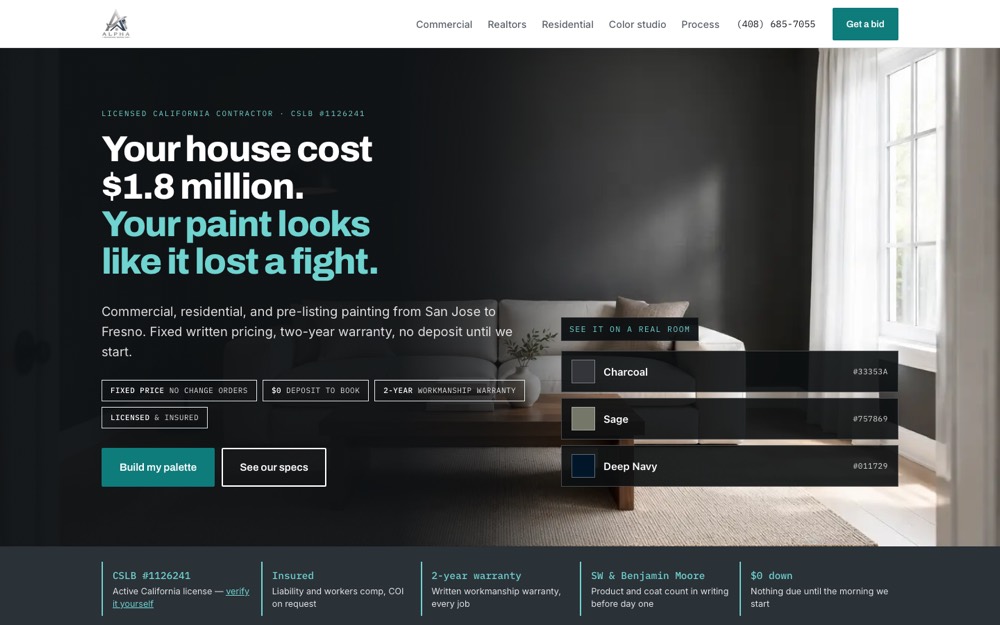
Alpha Professional PaintingMy company
A licensed painting corporation I own and run. Six-page lead-gen site with two regional SEO landing pages covering 21 cities.
alphapaintingcorp.com →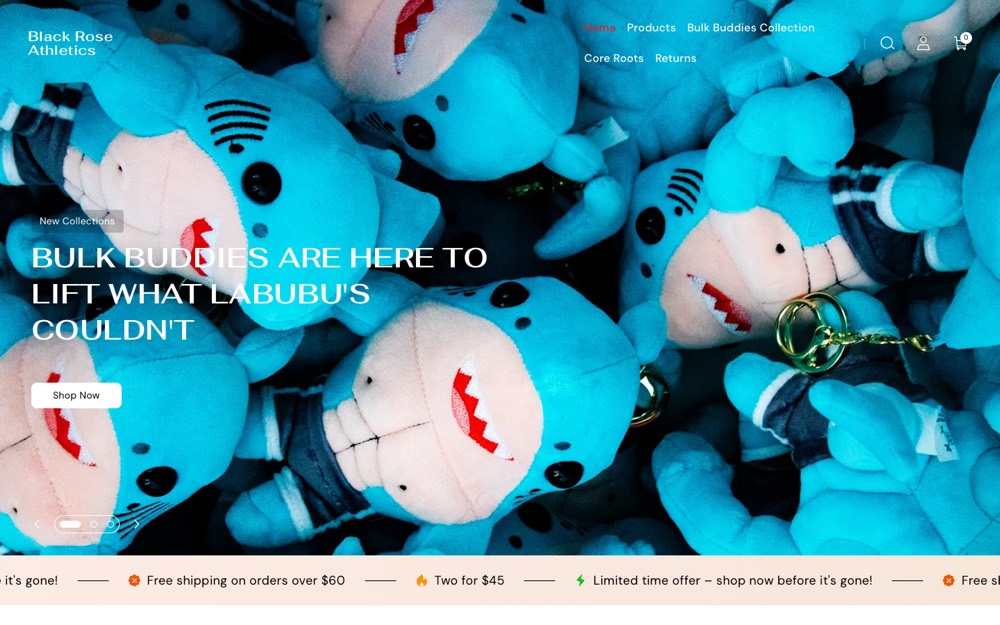
Black Rose AthleticsMy company
My own consumer products and collectibles brand — storefront, catalogue and checkout.
blackroseathletics.com →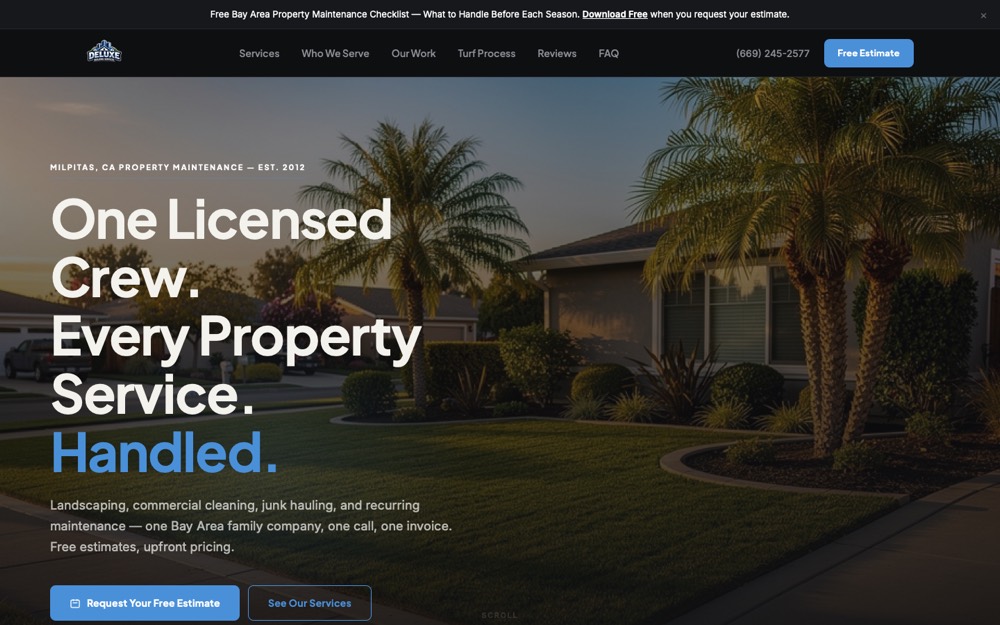
Deluxe Building Services
Commercial cleaning contractor in Milpitas. Designed, built and deployed solo.
deluxebuildingservices.com →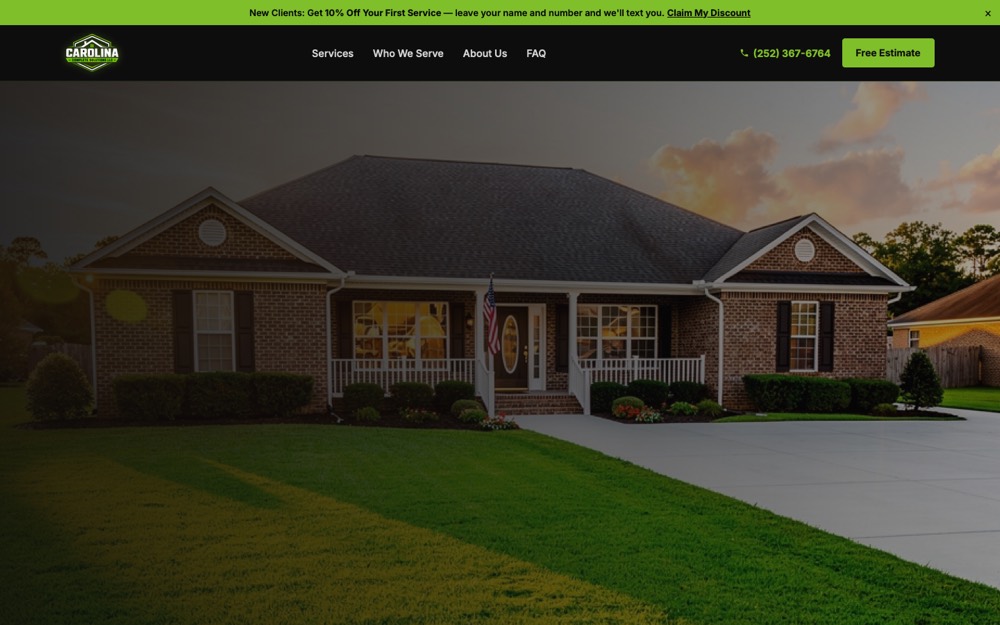
Carolina Complete Solutions
Property services company in Greenville, NC. Designed, built and deployed solo.
carolinacompletesolutions.com →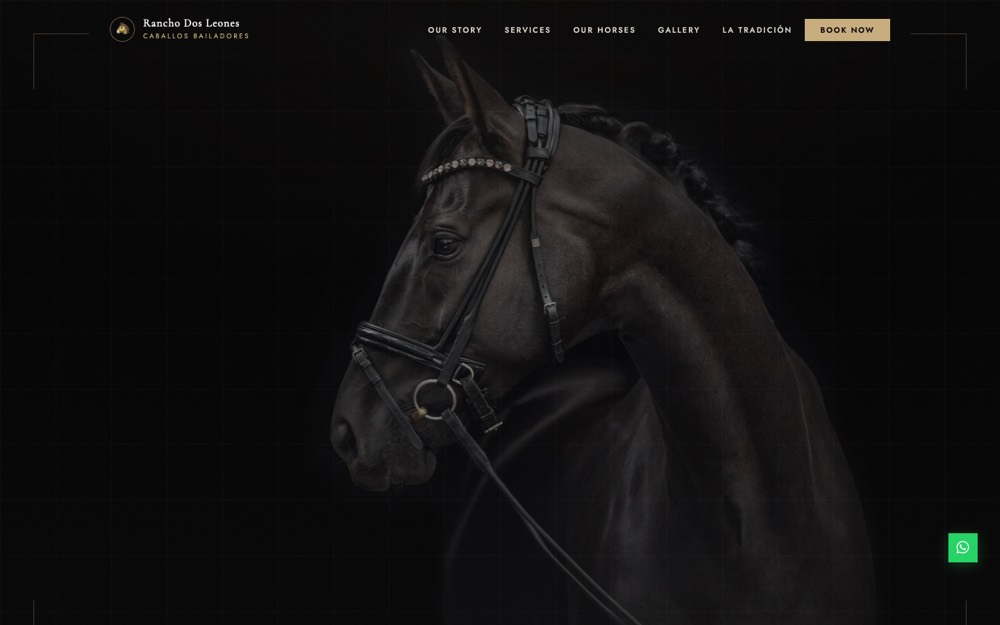
Rancho Dos Leones
Event venue in San Jose — gallery, enquiry flow and booking information.
ranchodosleones.com →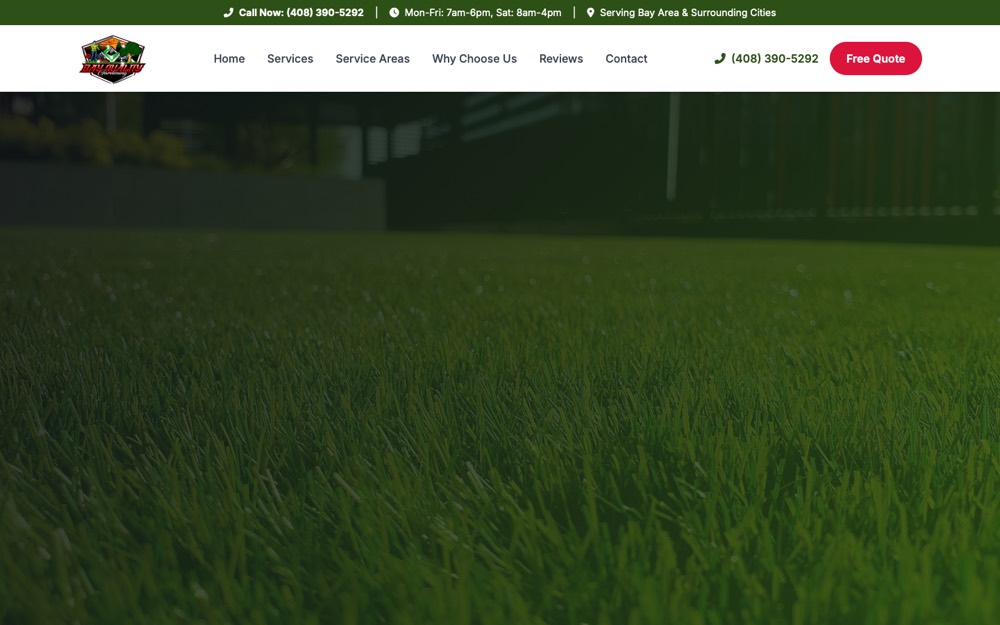
Bay Quality Gardening
Landscaping company serving San Francisco and Oakland.
bayqualitygardening.com →How I got here.
I started at Facebook in 2017 as an event operations intern, placed there through Year Up after deciding I wanted into this industry and needing a way in. Daily A/V checks across four venues, then a weekly round of two hundred conference rooms, finding faults before anyone sat down in them. Most things broke the same way twice, so I wrote down what we did about it — those checklists became maintenance SOPs other facilities teams picked up, and taught me that the fix which scales is usually documentation, not heroics.
Apple took me from the infrastructure behind Apple Events to six years as the Tier 2/3 resource for a hundred-plus designer Motion Design studio. I only got good at it by learning the pipeline from the artists using it — they knew exactly where it hurt, I had the access to go fix it. Along the way I kept hitting problems that needed software rather than a settings change, so I taught myself to build it.
Now I’m at MrBeast: about a thousand people across six companies, executive A/V and livestreaming, and the real-time systems behind shoots that only happen once. I also run two small businesses of my own, which has mostly made me better at the day job by teaching me what it actually costs when something doesn’t work.
Systems Administrator
1,000+ users across 6 business units, with identity and endpoint on Okta, Fleet, Jamf and Intune and roughly 295 Macs managed as code. Executive A/V from private C-suite streams up to company-wide broadcasts. Built the post-production side of an agentic AI service desk (~40% faster average resolution) and rebuilt the studio’s subscriber video wall (67% less API traffic). $120K saved in contract labour by bringing app development and A/V production in-house, with zero critical downtime on non-repeatable live events.
IT Specialist, Motion Design
Six years as primary Tier 2/3 for a 100+ designer studio, owning the escalations nobody else could close: render pipeline failures, GPU and VRAM faults, ATTO fibre channel throughput and SAN mount failures, usually mid-deadline. Standardising onboarding, asset tracking and plugin version control cut inbound volume 30%. Ran IT for Apple Newsroom across seven consecutive WWDCs.
IT Specialist, Video Production
One of a four-person team behind Apple Events: primary and failover production networks built from scratch for each event, 50+ edit workstations staged and imaged to an identical config, and shared storage carrying multi-stream 4K editorial and live playback at once. Cut render delays 25% through driver management, render node configuration and thermal audits, and built a macOS onboarding pipeline that had 40+ production hires working on Day 1.
Event Technician
Lead A/V technician on 100+ productions, from executive briefings to global all-hands — camera control, live audio and broadcast-quality signal routing. Weekly inspection and certification across 200 conference rooms. Led a campus-wide cabling replacement and codec upgrade, and co-wrote the maintenance SOPs later adopted across Facebook’s facilities worldwide.
Event Operations Intern
Sole responsibility for 4 high-traffic venues and logistics for roughly $25K of A/V equipment across Menlo Park, New York and Seattle.
Network Administration
Competitive one-year program in network administration and IT support — the way in that started all of the above.