MrBeast Apple Facebook
01

What I build.

Six things I get hired for. Every one of them has shipped and run under load.
01

Real-time production systems

Live GPS, telemetry and scoring for shoots that happen exactly once.

Ingest pipelinesGeofencingOperator consoles
02

Full-stack product

Next.js and TypeScript applications from schema to production deploy.

Auth & sessionsAPIsEdge deploys
03

Broadcast & live A/V

Private executive streams through company-wide broadcasts, run end to end.

CameraAudioSignal flow
04

IT & fleet engineering

Mac fleets managed as code, app packaging, identity, service-desk automation.

Fleet MDMOktaPackaging
05

Hardware integration

Making devices talk when the vendor never shipped an API — or shut down.

RS485WebUSBTelematics
06

AI in the toolchain

Agentic tooling built into real workflows, with the output actually reviewed.

Claude CodeAgent workflowsGenerative media
The deal
You dream it, I build it.

No AI slop. Efficiency, structure and security come first — clean, secure, effective solutions, and you still get the product you imagined.

02

Selected work.

Five systems I designed, built and ran myself — how they actually work, not what the job title was.
MrBeast · 2025–present
115 GPS units115 GPS units
Next.jsTypeScriptVercelTelematicsGeofencing

Live GPS manhunt, 115 devices, one map

Roughly 100 pursuit units, 10 camera operators and 5 ankle-monitored contestants, all on one real-time map. I ran it live on show day and hot-swapped failing trackers mid-production.

  • Normalised ingest, not 115 pollers. Trackers report over cellular into a telematics gateway and the app consumes one normalised feed. Device heartbeat packets share a frame type with position reports and had to be split out before they reached the parser.
  • Geofencing is computed on ingest. Zone membership and stillness are resolved server-side the moment a fix lands, so every operator station and every contestant phone agrees on who is out of bounds — about a second from boundary cross to siren on the contestant’s own handset.
  • Liveness as a state machine. Devices self-report every 30 seconds, so silence is signal. A per-minute watchdog escalates it: poke the tracker, then queue a remote reboot at 240 seconds, without anyone watching a dashboard.
  • One upstream call, many dashboards. The vendor API rate-limited us into blackouts. A server-side cache decoupled operator stations from upstream, so adding a screen costs nothing.
Watch the production →
Live trackingLive tracking
Next.jsRedisVercelGarmin inReachIridium

Satellite race tracking with zero cell coverage

Three two-person teams racing scouted courses in the Peru desert, the Ecuadorian jungle and the Argentine mountains — terrain with no cellular service anywhere on the route.

  • Built around gaps, not against them. Garmin inReach over Iridium into a vendor webhook, then a Next.js route and Redis — about 25 seconds satellite to screen. Dropouts are the normal case, so the pipeline treats a missing fix as expected state rather than an error.
  • Scoring is a ratchet, not a distance. Fixes snap to the team’s own GPX with turf.js, then pass a forward-only ratchet, a continuity window, an off-course corridor and motion gating. A noisy satellite fix can stall a team; it can never advance one.
  • Courses are data, not code. Routes load as GPX, so when production re-routed for weather I re-cut and redeployed overnight instead of rewriting logic. Final courses ran 15.2, 11.1 and 12.6 miles across 108 waypoints.
  • A 21 KB navigator in their pockets. A service worker caches the whole route; bearing is computed on-device and waypoints auto-advance inside 100 feet, so it works with the radio off. The public feed coarsens positions to about a kilometre for contestant privacy.
Watch the production →
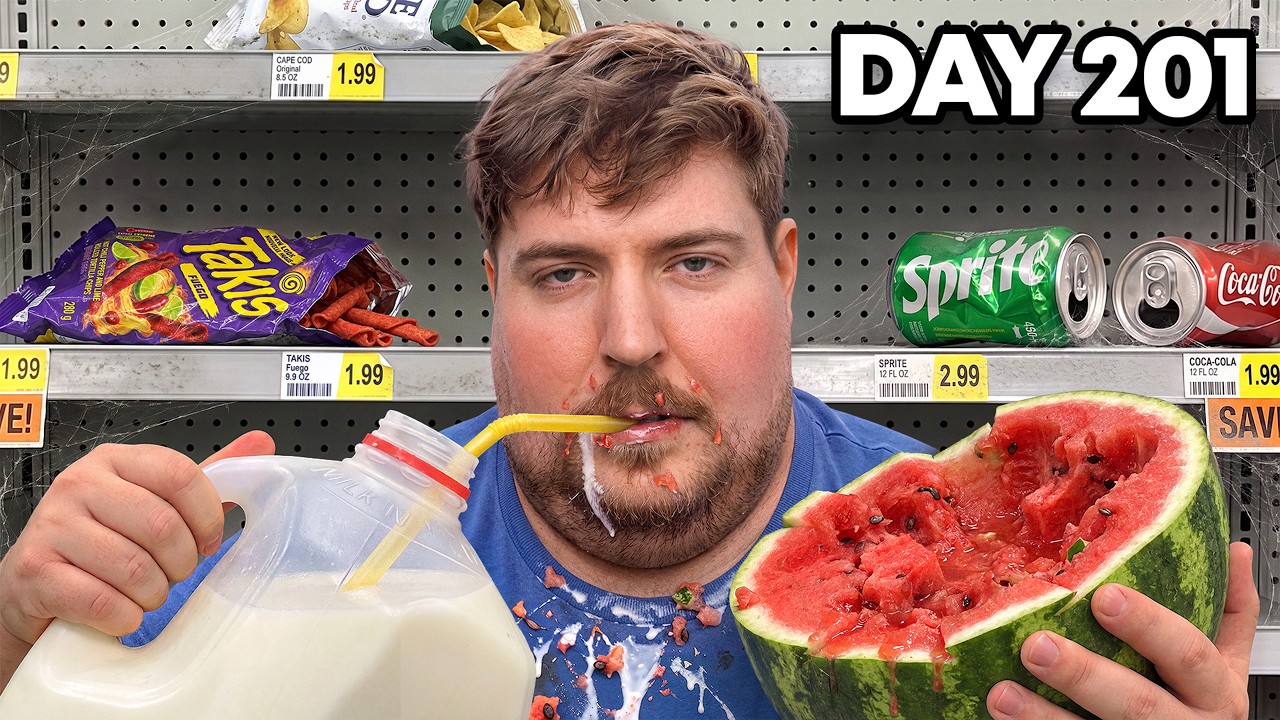
Eat Everything In A Grocery Store, Win $1,000,000On screen at 34:24
Node.jsExpressSocket.ioUpstash RedisVerceliFIT GlassOSPython / uvicornScreen Wake Lock

A three-screen counter that cannot drift

One person running 100 miles in 48 hours, with a calorie countdown falling from ~2.4 million while the miles climbed from zero — across three monitors with no sync layer between them.

  • Shared anchor instead of shared state. Every screen derives its number from one timestamp anchor rather than being pushed a value, so a panel that reloads mid-show returns to the same count the others are showing.
  • Hardware bridge on a one-second poll. A Node service reads the treadmill through an iFIT fleet-controller bridge every second, converts kilometres to miles, and fans out to every display on a 250ms socket tick. The finish event crosses machines — 100 miles freezes both counters at once.
  • Digits split across three panels. Each screen renders one digit group in a seven-segment face, pixel-matched at the seams so the figure reads as a single number across the wall.
  • Designed for 48 hours unattended. Screen Wake Lock plus a dual requestAnimationFrame/setInterval loop keeps counting when a tab gets throttled, and Redis snapshots every three minutes mean a crash costs seconds, not the run.
Watch the segment →
RS485 · 115200 BAUDWEBUSB KIOSK → 18 DOORS Shipped 2026
WebUSBRS485Next.jsOktaSlack APIOomnitzaServal

Reverse-engineered an 18-door locker bank

The vendor behind the office locker bank shut down and took the software with it, leaving eighteen doors that no longer opened programmatically and a hardware bill to replace them.

  • Protocol recovered off the wire. RS485 at 115200 baud with XOR-checksum framing. Door commands and status reads were reconstructed from captured traffic, then driven straight from a tablet kiosk over WebUSB — no vendor service anywhere in the path.
  • Authorisation happens before the door moves. QR and PIN codes expire after 72 hours and lock out on brute force; the requester’s Okta account is verified first and the code arrives by Slack DM to them alone.
  • It writes back to the systems of record. Check-out and check-in post to Oomnitza, so asset state stays correct without anyone typing it. Twelve service-desk workflows raise the requests and every door-open is logged permanently.
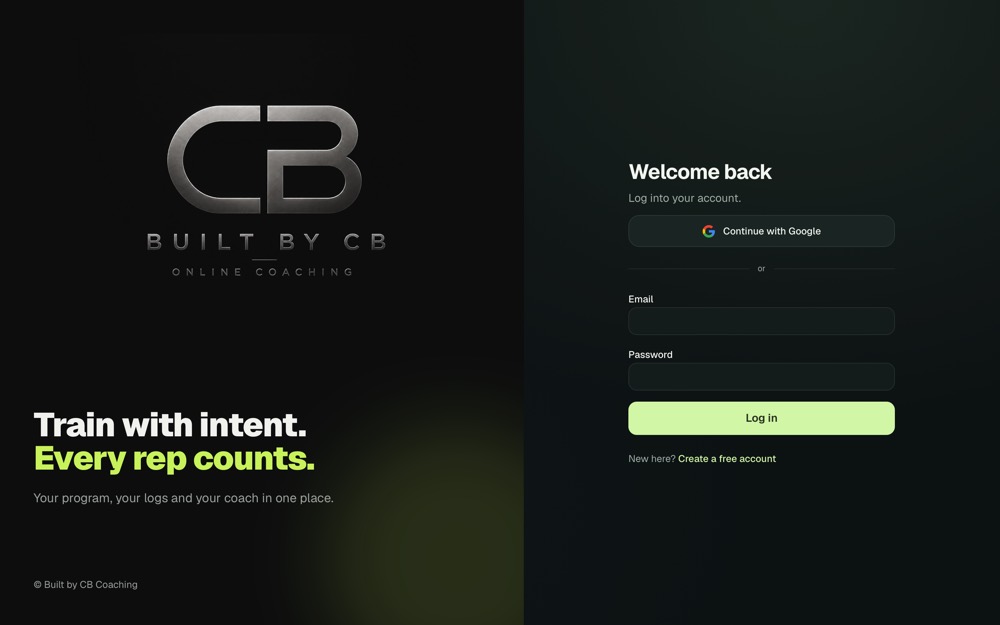
Built by CB coaching appLive product

A coaching platform people actually log into

A real client-facing product, not a brochure site. Members sign in, land in their own training programme, log sessions against it and message their coach.

  • Per-user state on every request. Session handling and authorisation live at the route layer, with React Server Components streaming the shell while the user’s own data resolves behind it.
  • Cache policy is the security boundary. Static chunks ship content-hashed and immutable with preload hints on the critical path, while every authenticated route returns no-store — the failure mode here is one member’s data cached at the edge and served to another.
  • Open signup from day one. Google OAuth beside email and password, with free accounts open to anyone, so signup, session and recovery all had to be right before launch rather than after.
builtbychris.app →
03

How I work.

Four rules that survived contact with live shoots.
01

Efficiency

Fewer moving parts. The subscriber wall went from 1,242 lines across three files to a 121-line shared core — it is more reliable because there is less of it.

02

Structure

Data in, data out. Courses, zones and thresholds are configuration, so a change at 2am before a shoot is a redeploy, not a rewrite.

03

Security

Keys server-side, access checked before the action, nothing user-specific cached at the edge. Built in from the first commit, not bolted on at review.

04

No AI slop

I use AI hard and read every line it writes. It drafts, I scope, challenge and harden. The judgement is mine and so is the bug.

05

How I got here.

One place for the whole career — no separate résumé to chase.
2016 — present

I started at Facebook in 2017 as an event operations intern, placed there through Year Up after deciding I wanted into this industry and needing a way in. Daily A/V checks across four venues, then a weekly round of two hundred conference rooms, finding faults before anyone sat down in them. Most things broke the same way twice, so I wrote down what we did about it — those checklists became maintenance SOPs other facilities teams picked up, and taught me that the fix which scales is usually documentation, not heroics.

Apple took me from the infrastructure behind Apple Events to six years as the Tier 2/3 resource for a hundred-plus designer Motion Design studio. I only got good at it by learning the pipeline from the artists using it — they knew exactly where it hurt, I had the access to go fix it. Along the way I kept hitting problems that needed software rather than a settings change, so I taught myself to build it.

Now I’m at MrBeast: about a thousand people across six companies, executive A/V and livestreaming, and the real-time systems behind shoots that only happen once. I also run two small businesses of my own, which has mostly made me better at the day job by teaching me what it actually costs when something doesn’t work.

Oct 2025 — Present

Systems Administrator

MrBeast · Greenville, NC

1,000+ users across 6 business units, with identity and endpoint on Okta, Fleet, Jamf and Intune and roughly 295 Macs managed as code. Executive A/V from private C-suite streams up to company-wide broadcasts. Built the post-production side of an agentic AI service desk (~40% faster average resolution) and rebuilt the studio’s subscriber video wall (67% less API traffic). $120K saved in contract labour by bringing app development and A/V production in-house, with zero critical downtime on non-repeatable live events.

Sept 2019 — Sept 2025

IT Specialist, Motion Design

Apple via Alt Systems · Sunnyvale, CA

Six years as primary Tier 2/3 for a 100+ designer studio, owning the escalations nobody else could close: render pipeline failures, GPU and VRAM faults, ATTO fibre channel throughput and SAN mount failures, usually mid-deadline. Standardising onboarding, asset tracking and plugin version control cut inbound volume 30%. Ran IT for Apple Newsroom across seven consecutive WWDCs.

Aug 2018 — Sept 2019

IT Specialist, Video Production

Apple via Marriette Systems · Sunnyvale, CA

One of a four-person team behind Apple Events: primary and failover production networks built from scratch for each event, 50+ edit workstations staged and imaged to an identical config, and shared storage carrying multi-stream 4K editorial and live playback at once. Cut render delays 25% through driver management, render node configuration and thermal audits, and built a macOS onboarding pipeline that had 40+ production hires working on Day 1.

Aug 2017 — Aug 2018

Event Technician

Facebook via AVT Tech & Milestone AV · Menlo Park, CA

Lead A/V technician on 100+ productions, from executive briefings to global all-hands — camera control, live audio and broadcast-quality signal routing. Weekly inspection and certification across 200 conference rooms. Led a campus-wide cabling replacement and codec upgrade, and co-wrote the maintenance SOPs later adopted across Facebook’s facilities worldwide.

Feb 2017 — Jul 2017

Event Operations Intern

Facebook · Menlo Park, CA

Sole responsibility for 4 high-traffic venues and logistics for roughly $25K of A/V equipment across Menlo Park, New York and Seattle.

Aug 2016 — Feb 2017

Network Administration

Year Up · San Jose, CA

Competitive one-year program in network administration and IT support — the way in that started all of the above.

06

Stack.

What I actually reach for.
Identity, Security & Endpoint
Okta · Azure AD · Jamf · Fleet MDM · Intune · Munki · SentinelOne · Cloudflare · Nudge Security · Google Workspace · Microsoft 365 · Serval · Oomnitza
Production & A/V
Panasonic AW-RP120 · Yamaha CL/QL/LS9 · Cisco SX/MX codecs · Sony FX line · AJA Ki Pro · OBS · audio DSP & touch-panel control · Adobe Creative Cloud · Blender · Zoom · TMS
Build & AI
Next.js · React · Node.js · TypeScript · Hono · Vercel · Cloudflare Workers & D1 · Upstash Redis · Mapbox GL · deck.gl · turf.js · Socket.io · WebUSB · Web Crypto · Python · Bash · SwiftUI · Xcode · Claude Code · ChatGPT · Genspark · Higgsfield
Infrastructure
Cisco · Ubiquiti · Meter · Starlink · OpenPath · Kisi · AWS · Azure · GCP · SAN / NAS · ATTO Fibre Channel · RS485 · Iridium / Garmin inReach